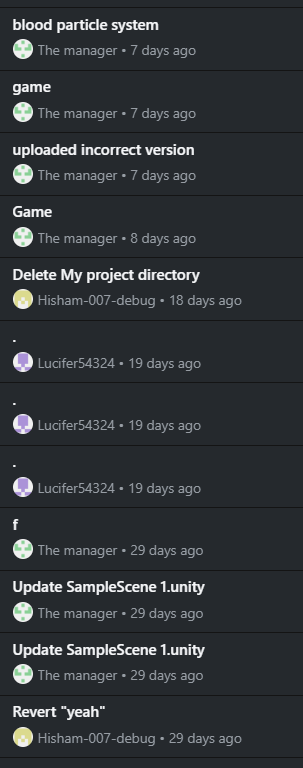
During weeks 4 and 5, a major focus was making sure our project environment was set up correctly to avoid technical issues later on. While another team member handled setting up the actual Unity project, I made sure that us developers were all using the exact same version of Unity to prevent compatibility errors. I also took the time to test our GitHub connection to make sure it all worked smoothly. I tested pushing and pulling files, and looked into how to handle merge conflicts. Testing this early on is a necessary step so we don’t lose any work or break the project when we all start adding our files at the same time.
Since my game development skills are on the inexperienced side, I spent a lot of time getting comfortable with the engine. I finished the first tutorial which covered the basics of Unity. From there, I did other tutorials focusing specifically on working with tilemaps and importing characters. This was a very helpful learning process for me. Understanding how these tools work now means I will be ready to actually implement the game assets and movement logic once our artists finish them.
I also completed the required Game Design Document (GDD) for our team. Creating this was important to get all of our ideas documented and to make sure the project remains within a realistic scope. I will be editing it as needed over the coming weeks as our game develops. I also plan on adding more images into it, like our character models and art assets, to fully showcase our game’s design once they are ready. Game Design Document.docx
As the team operator, I have been checking in on everyone’s progress to see how they are managing their roles. When I try to communicate with the team as of right now, it hasn’t been that difficult and everyone is doing well. However, I know that as the due date gets closer and our tasks become more complex, keeping everyone organised might become a bigger challenge. Tracking our progress like this helps me stay prepared for the more stressful times that may be coming up.